By Mayur J Shah
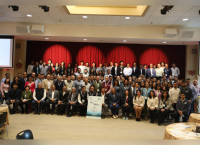
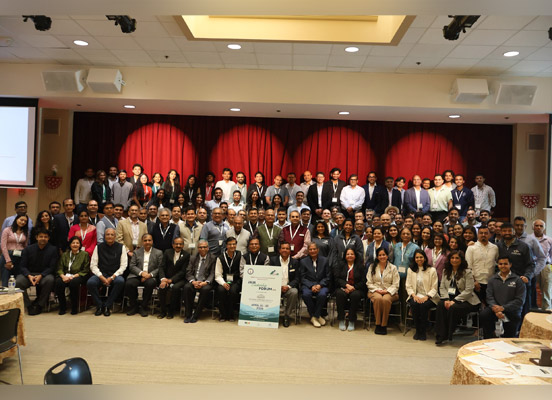
The Jain Leadership Forum 2026 (JLF 2026), organized by JAINA’s Long Range Planning (LRP) Committee, brought together a dynamic cross-section of Jain leaders, thinkers, and changemakers from across North America. Held at the Jain Center of Northern California in Milpitas from April 10 to 12, the gathering was intentionally designed not as a traditional conference, but as a collaborative, working forum.
Participants from JAINA, Young Jains of America (YJA), Young Jain Professionals (YJP), Jain centers, and the Jain International Trade Organization (JITO) came together with a shared intention: To reimagine Jain Centers as vibrant communities of belonging—where shared values, service, and spiritual growth unite generations and strengthen our collective identity.
At its core, the forum aimed to inspire a collective awakening of purpose—one that moves beyond preservation toward building communities where every individual can find connection, meaning, and a sense of place. The goal was clear: move from success to significance, and ensure Jainism remains relevant in 2040 and beyond.
A purpose-driven opening
The forum opened Friday evening (April 10) with a warm reception and dinner that quickly set a tone of connection and shared intent. Through introductions and interactive icebreakers, participants began building relationships that went beyond networking—laying the foundation for a shared sense of community.
.jpg)
Dr Dipak Jain, former dean of the Kellogg School of Management, reflected on the global impact and potential of the Jain community.
A traditional aarti anchored the gathering in spiritual practice, reinforcing a collective identity rooted in Jain values and a shared sense of belonging. Dr Manoj Jain (Chair, LRP Committee) and Dr Dipak Jain (former Dean, Kellogg School of Management) framed the weekend as a call to action: We are here to move the needle—and to shape what Jainism becomes in the decades ahead.
Setting the vision: Jainism for the future
Saturday’s programming formed the intellectual and strategic core of the forum. The sessions centered around a critical question: What must Jain Centers become to foster deeper connection, belonging, and engagement across generations and geographies?
Leaders from across major Jain organizations shared perspectives, including JAINA President Atul Shah, First Vice President Dr Jayesh Shah, YJA Co-Chairs Vanshika Shah and Aaryan Shah, YJP Co-Chair Mannan Mehta, and JCNC President Jyoti Vora.
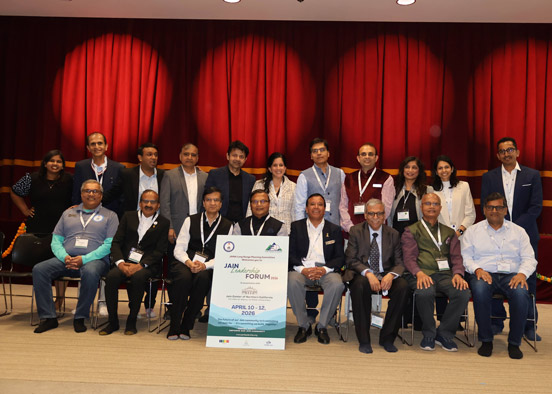
JAINA’s Long Range Planning Committee.
Across these voices, key themes emerged - Strengthening collaboration across organizations; increasing engagement among youth and young professionals, and enhancing the visibility and relevance of Jain principles in modern society.
The vision that emerged went beyond programming—it was about transformation. Jain Centers must evolve into living ecosystems of connection, service, and shared values, where individuals don’t just attend but feel a genuine sense of belonging and ownership.
Designing for community engagement
A standout highlight of the forum was an immersive, four-part workshop on community engagement—grounded in research conducted with Jain centers across North America. Participants explored the distinction between attendance, belonging, and ownership, recognizing that true community strength lies not in how many people show up, but in how many feel connected, valued, and invested.
In one of the most dynamic exercises of the weekend, attendees engaged in a role-play grounded in the Jain principle of Anekantvad (multiple perspectives). Participants stepped into the roles of different community members—from Gen Z youth to seniors—to debate real-world scenarios facing Jain centers today.
This exercise surfaced not only diverse viewpoints but also gaps in how different groups experience (or struggle to experience) belonging. Working in small groups, participants designed practical programming ideas tailored to youth, young adults, seniors, and newcomers—focusing on what would help each group feel more meaningfully connected to the community.
Conversations centered not just on activities, but on creating pathways into belonging. The session culminated in teams shaping these ideas into early-stage implementation concepts—laying the groundwork for initiatives that could foster deeper engagement, stronger relationships, and a more inclusive community experience.
More than just a workshop, this experience embodied the forum’s core philosophy: Belonging is not accidental—it must be intentionally designed.
Expanding perspective: From survival to significance
A series of thought-provoking talks deepened the conversation. Dr Cogen Bohanec (Arihanta Institute) explored how the Jain community can evolve from survival to significance by reclaiming identity, values, and purpose. Dr Nikhil Jain examined the psychology of belonging, emphasizing how strong, lasting communities are intentionally cultivated.
Ajay Sheth drew lessons from other successful communities as models for growth and sustainability. In the evening keynote, Dr Dipak Jain, along with Abhishek Sharma (Consulate General of India, San Francisco), reflected on the global impact and potential of the Jain community.
Together, these perspectives reinforced a central idea: The future of Jainism depends not only on what we preserve, but on how we create environments where people feel connected and inspired to participate.
From ideas to action
What distinguished JLF 2026 was its clear emphasis on execution. Participants explored innovative projects spanning education, technology, and community engagement—focusing on how to scale impact through collaboration and structured action.
A shared responsibility emerged throughout the discussions: To nurture communities rooted in compassion, learning, and belonging—and to intentionally create experiences where individuals feel welcomed, valued, and inspired to contribute.
A collaborative closing—and a beginning
The forum concluded not just with a sense of alignment, but with a renewed clarity around one central priority: community engagement rooted in belonging.
Across discussions, participants acknowledged a shared reality—while Jain centers have long been places of worship and gathering, many individuals across generations still struggle to feel a deep sense of connection, ownership, or belonging. This awareness was not viewed as a shortcoming, but as an opportunity: a call to evolve.
There was a collective recognition that attendance alone is not engagement. True engagement requires creating spaces where individuals feel seen, valued, and connected to something larger than themselves.
Participants reflected on the need to intentionally design communities that welcome newcomers with openness and accessibility, create meaningful roles for youth and young professionals, foster intergenerational relationships rooted in mutual respect, and encourage shared ownership, not just participation.
The conversation shifted from identifying gaps to embracing responsibility. A strong emphasis was placed on creating pathways to belonging—ensuring that every individual, regardless of age or background, can find their place within the Jain community. This included rethinking programming, leadership structures, and the overall experience of what it means to be part of a Jain Center.
Grounded in this shared understanding, the forum reinforced a “90-day action plan” mindset—encouraging participants to take tangible steps toward building more inclusive, engaging, and connected communities. In his closing remarks, Prem Jain captured the spirit of the moment: The future of Jainism will not be defined by how many people show up—but by how many people feel they truly belong.
(For more information about the conference and about the Long Range Planning Committee’s work, please visit: www.jainleadership.org)
(All photos courtesy: Urvi Jain & Deepam Jain, Provided by JLF)